Benefits by industry
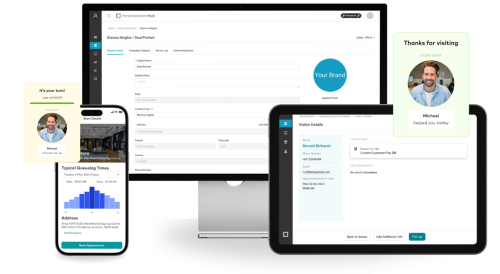
Personalisation Hub is 1 platform, but each industry uses a different part of it first. For telcos and banks the predominant use case is passer-by traffic: more of the people walking past come in, and more of them convert once inside. This page sets out, sector by sector, the in-store challenge, the features that address it, and the use case most customers start with. Every benefit is tied to a feature documented in this help centre; the illustrations come from the platform's demo tenant, which already carries reason-for-visit categories, store segments, display types and mobile site templates for several of these sectors.
For the feature-by-feature view, see About Personalisation Hub. For the 3 primary use cases in full, see Use cases supported by Personalisation Hub.
Retail and consumer electronics
Electronics and specialty retailers run frequent product launches and promotions across many stores, but the same creative plays on every screen regardless of local stock, weather or who is standing in front of it. Head office rarely knows which campaign a customer saw before they spoke to staff, and store teams have no way to switch messaging when a line sells out.
What Personalisation Hub delivers
- Localised campaigns from the staff tablet. HQ defines variable store segments such as IPHONE 17 - Out of Stock or Hot Day; a store manager switches the segment on and the matching campaigns start or stop in that store within the rotation. See Localise campaigns with store segments and Update your store's segments (Retail Admin).
- 1 campaign, every screen size. Display types carry a resolution and default playlist, and the AI agents generate landscape and portrait creative from 1 brief, so a launch reaches window, aisle and counter screens without separate production runs. See Create a display type and playlist and Generate storyboard, copy and creative with AI.
- Passer-by targeting. With a webcam on a shopfront display, campaigns aimed at a male or female audience swap in near real time, and passer-by counts appear in Insights / Analytics. See Target passers-by using computer vision at the edge.
- Queue by product interest. Reason-for-visit categories such as New Phone with iPhone, Pixel and Samsung sub-categories tell staff why each visitor is waiting, and can localise a campaign when most of the queue is there for the same product. See Add reason-for-visit categories and sub-categories and Localise campaigns by visitors' reason for visit.
- Closed-loop reporting. Campaign playback, QR conversion and ingested POS transactions are downloadable as CSV or JSON for attribution in your own tools. See Review campaign performance in Insights / Analytics.
Typical first use case. Enable digital signage in 1 flagship store, register its displays, and launch a product campaign with a variable segment that staff can toggle when stock runs out. Start at Enable digital signage.
Retail media networks
Retailers monetising their in-store screens need to prove to brand partners that a campaign played where and when it was booked, and that it reached the audience promised. As third-party cookies decline, the differentiator is first-party data — loyalty, app and in-store behaviour — activated on the retailer's own domain rather than through an ad-tech intermediary.
What Personalisation Hub delivers
- Self-hosted screens on your domain. Displays, campaigns and playback data live in your own AWS account, so partner campaigns run on infrastructure you control. See Where is my data stored and how is the platform secured?.
- Proof of play. Every display keeps a campaign playback audit (date, playback strategy, campaign, duration, matched rule), and the Display Health Status and Campaign Playback reports export the same data per display. See View the campaign playback audit for a display.
- Audience measurement without images. Computer vision at the edge reports passer-by volume and demographics per display, hourly, and campaign engagement funnels (ROTS / VAC / views). See Does computer vision store images of shoppers?.
- First-party targeting. Loyalty and CDP attributes sent to the Visitor API — product holdings, plan type, segments — trigger campaigns on a specific display or across a store when a known customer checks in. See Trigger campaigns from customer or decisioning data.
- Proximity and QR engagement. MIST zones change the content near a customer's phone, and QR Control lets shoppers pull a partner's offer to their own device from the screen. See Enable proximity personalisation with MIST and Enable QR Control and set the default QR code settings.
- Sponsored slots. The platform roadmap includes localised, personalised and sponsored ad slots that partners can pre-book or fill programmatically. This is listed as coming soon in the use-cases overview and is not yet available in the platform.
Typical first use case. Register the displays in a pilot store, run a partner campaign on a schedule, and hand the partner the Campaign Daily Summary and Display Audience Hourly downloads at the end of the flight. Start at Schedule a campaign.
Telecommunications (telco stores)
The predominant use case for a telco store is passer-by traffic: the screens at the front of the store show the same national creative to everyone walking past, so few of them come in. Once inside, visits are long and consultative: new handsets, plan changes, business accounts. Customers wait without knowing how long, and staff do not know who is next or why they came, so fewer visits convert.
What Personalisation Hub delivers
- Passer-by traffic from the shopfront. External-facing displays play the launch, plan or trade-in offer chosen for that store and time of day, and switch it for the audience computer vision detects. A QR code on the screen lets a passer-by claim the offer or join the queue before they reach the door. See Target passers-by using computer vision at the edge and Enable QR Control and set the default QR code settings.
- Virtual queueing by reason for visit. The demo tenant's New Phone category (25 minutes to serve) with iPhone, Pixel and Samsung sub-categories, and visitor types such as I'm a Business Customer, show the model: visitors scan a QR code, choose why they are there, and receive SMS updates while they browse. See Enable virtual store queueing.
- Staff see the customer before they say hello. When staff pick up a visitor from the queue, the tablet shows their reason for visit, notes, languages and any connected profile data or recent display interactions. See View a visitor's recent interactions and profile data.
- Route by language or account type. Store managers place a visitor on hold with a required language or note, and staff record the languages they speak, so the right person picks them up. See Handle visitors with special requests (language or business customers) and Update the languages you speak.
- Localised launch campaigns. Segments such as Metro, Regional and Airport and display tags such as External Facing let 1 launch campaign play differently by store and by screen. See Target campaigns at specific displays with display tags.
- Single sign-on for store staff. Staff and store managers are provisioned through your SAML identity provider, so the tablet follows your existing joiner and leaver process. See Integrate single sign-on (SAML) for store staff.
Typical first use case. Put a device launch campaign on the external-facing displays of 1 store, localised by store segment and with a QR code to join the queue. Then enable virtual store queueing with reason-for-visit categories for handsets, plans and business accounts, so the extra visitors convert. Start at Enable virtual store queueing.
Banking, insurance and financial services branches
The predominant use case for a branch is passer-by traffic: the branch display plays generic brand content that has no relationship to the offers a passer-by has already seen online, so it draws few of them in. Branch visits are fewer but higher value: home loans, credit cards, account changes. Once inside, customers arrive without an appointment, wait in a shared lounge, and are served by whoever is free rather than the specialist they need, so fewer visits convert.
What Personalisation Hub delivers
- Passer-by traffic from the branch window. The window display plays the rate, card or account offer for that branch and time of day. Its QR code books an appointment or joins the queue on the spot, so a passer-by becomes a booked visit. See Enable QR Control and set the default QR code settings and Enable appointment bookings.
- Appointments and click-to-confirm. Customers book a branch appointment from the store locator or mobile site, confirm it by SMS link, receive a reminder, and check in on arrival by scanning the display's QR code. Branches set slots per weekday and holiday; HQ sets duration, lead time and cancellation rules. See Enable appointment bookings and Appointment template settings reference.
- Queueing with time to serve. The demo tenant's Home Loan reason for visit (45 minutes) with Variable Rate and Fixed Rate sub-categories drives an honest estimated wait time and tells the specialist what the customer wants before the conversation starts. See Add reason-for-visit categories and sub-categories.
- Offers that follow the customer in. Because the platform sits on your primary domain, the offer a customer saw on the website can be shown again on the branch display and mobile store site, and their engagement with it appears on the staff tablet when they are picked up. See Use customer and decisioning data to personalise the store visit.
- Branch-level control of access and data. IP restrictions or a CDN in front of the platform, data held in your own AWS account, and a configurable retention period for queue and appointment records. See Where is my data stored and how is the platform secured?.
- End-to-end visibility for HQ. Wait times, serve times and reason-for-visit volumes per branch in Visitor Insights and Store Insights, with upcoming appointment capacity per week. See Review campaign performance in Insights / Analytics.
Typical first use case. Put an offer campaign with a book-an-appointment QR code on 1 branch's window display. Then enable appointments and queueing in that branch with Home Loan, Credit Card and Other reasons for visit, and a concierge display with QR check-in at the entrance, so the extra visitors are served by the right specialist. Start at Enable appointment bookings and Set up a dedicated concierge display or kiosk.
Hospitality, pubs and quick-service restaurants
Pubs, restaurant groups and quick-service chains run menus that change by time of day, weather and stock, across venues with very different customers. Guests queue at the bar or door with no idea of the wait, and menu boards are updated by hand or not at all.
What Personalisation Hub delivers
- Day-parting and scheduled menus. A campaign carries 1 or more schedules — breakfast, lunch, dinner, or only while the venue is open — and Menu Board - Landscape and Menu Board - Portrait display types in the demo tenant show the intended set-up. See Schedule a campaign.
- Weather and season localisation. Variable segments such as Hot Day and Cold Day, and a per-store season that is set automatically from the store's country, let cold drinks or soups take over the boards when conditions change. See Localise campaigns with store segments.
- Queue for a table. The demo tenant's default mobile site includes a Queue for Table menu item shown in the connected-store and connected-display states, so guests join from a QR code at the door and get an SMS when their table is ready. See Let a visitor join the queue by scanning a QR code on a display.
- Hide sold-out items. A store manager toggles an out-of-stock segment from the tablet and the campaigns for that item stop playing in that venue. See Update your store's segments (Retail Admin).
- Personalised offers on the guest's phone. QR Control on a menu board lets a guest pull an offer to their phone, and profile data from your loyalty platform can unlock a personalised discount through the Visitor API. See Enable QR Control and set the default QR code settings.
Typical first use case. Register the menu boards in 1 venue as a Menu Board display type, schedule breakfast, lunch and dinner campaigns, and add a Hot Day segment the manager can switch on. Start at Create a display type and playlist.
Grocery, pharmacy and health retail
Grocers and pharmacies serve high volumes of short visits, many of them with a specific purpose — a prescription, a click-and-collect order, a health consultation — that customers would rather not wait in a physical line for. Screens above fridges, at the dispensary and in the aisle play national promotions with no link to the local category or the shopper in front of them.
What Personalisation Hub delivers
- Prescription and pickup queueing. The demo tenant's Pick Up Prescription reason for visit (15 minutes) and the Appointments - Click & Collect SMS template show the model: the customer joins the queue or books a pickup slot, keeps shopping, and is texted when it is ready. See Enable virtual store queueing and SMS and email messages sent to visitors.
- A pharmacy mobile site. A Pharmacy - Store Connect mobile site template and Pharmacy Landscape / Pharmacy Portrait display types exist in the demo tenant as starting points for a dispensary-focused experience. See Assign a different mobile site template to a store, display or zone.
- Category screens. Display types such as Fridge Top Display (3500 x 1080) and display tags let a campaign target only the screens in a category bay, and zone templates change the mobile site as the shopper moves between departments. See Target campaigns at specific displays with display tags and Personalise a visitor's store experience.
- Weather-led ranging. Hot Day and Cold Day segments switch cold drinks, hydration and cold-and-flu messaging by store. See Localise campaigns with store segments.
- POS attribution. The Transactions report ingests per-line-item POS data so campaign playback can be compared with sales in the same store and hour. See Review campaign performance in Insights / Analytics.
Typical first use case. Enable queueing in 1 pharmacy with Pick Up Prescription as the first reason for visit and a QR code at the dispensary counter. Start at Enable virtual store queueing.
Airports, transport hubs and venues
Stores and food courts inside airports, stations and stadiums face a captive but transient audience, tight trading windows around departures and events, and landlord requirements for what plays on shared screens. The same national campaign is rarely right for a terminal at 05:00 and a suburban high street at noon.
What Personalisation Hub delivers
- An Airport segment. Fixed store segments such as Airport, Metro and Regional — set by HQ, not by the store — keep terminal stores on their own campaign set. The demo tenant includes an international airport store to illustrate it. See Localise campaigns with store segments.
- Food court and external screens. Display tags such as Food Court, External Facing and Internal Facing target campaigns at specific screens within a venue. See Target campaigns at specific displays with display tags.
- Trading-hour schedules. Campaigns can run only while each store is open, with special holiday hours per store, so early and late trading windows are respected automatically. See Schedule a campaign and Set special holiday opening hours (Retail Admin).
- Directions inside the venue. The mobile store site's Away from Store state offers Google Maps directions to the store's front door, reached from a QR code on any screen. See Add Google Maps directions to your mobile site.
- Screen health across many sites. Offline device notifications email the right people when displays in a venue have been offline for a set time, and the stores list shows connected displays per site. See Get notified when a display goes offline.
Typical first use case. Create the Airport fixed segment, assign it to terminal stores, and clone the national campaign with an airport-only schedule. Start at Localise campaigns with store segments.
Automotive dealerships and showrooms
Showroom visits are long, appointment-led and high value — a test drive, a service booking, a finance conversation — and the customer has usually configured the car online first. Front-of-house staff cannot tell a browsing visitor from one with a booking, and showroom screens show the same range film to everyone.
What Personalisation Hub delivers
- Appointments for test drives and service. Customers book a slot, confirm by SMS link, get a reminder and check in on arrival; each store controls its own slots and blocks out dates it cannot serve. See Enable appointment bookings and Block out dates and times for appointments.
- Reason for visit and visitor type. Categories such as Test Drive or Service with a time to serve, and visitor types (new, existing, business), tell staff who to pick up and how long they will need. Sub-categories can carry the model line. See Add reason-for-visit categories and sub-categories.
- The car they configured, on the showroom screen. Product holdings and profile data sent to the Visitor API when a known customer checks in can trigger a campaign for that model on the display nearest them, and QR Control lets them open the model page on their phone. See Trigger campaigns from customer or decisioning data and Enable QR Control and set the default QR code settings.
- Localised by dealership. Fixed segments for region or franchise and variable segments for local stock keep the showroom screens relevant. See Localise campaigns with store segments.
- Dealer-group visibility. Wait times, serve times, booked slots and reason-for-visit volumes per dealership in Insights / Analytics. See Review campaign performance in Insights / Analytics.
Typical first use case. Enable appointments in 1 dealership with Test Drive and Service reasons for visit, and add a check-in QR code on the showroom entrance display. Start at Enable appointment bookings.
Related
Last updated 17 September 2026