
In short
Most writing on real-time personalisation is about websites. The bigger opportunity is the store, using data retailers already have.
- Most stores still show every customer exactly the same thing.
- Personalisation is a ladder: default, localised, personalised, engaged.
- Start with the moment closest to purchase and measure it against a control.
Search for “real-time personalisation” and you’ll get a wall of articles about milliseconds, event streams and in-session signals. All useful. Almost all of it stops at the website.
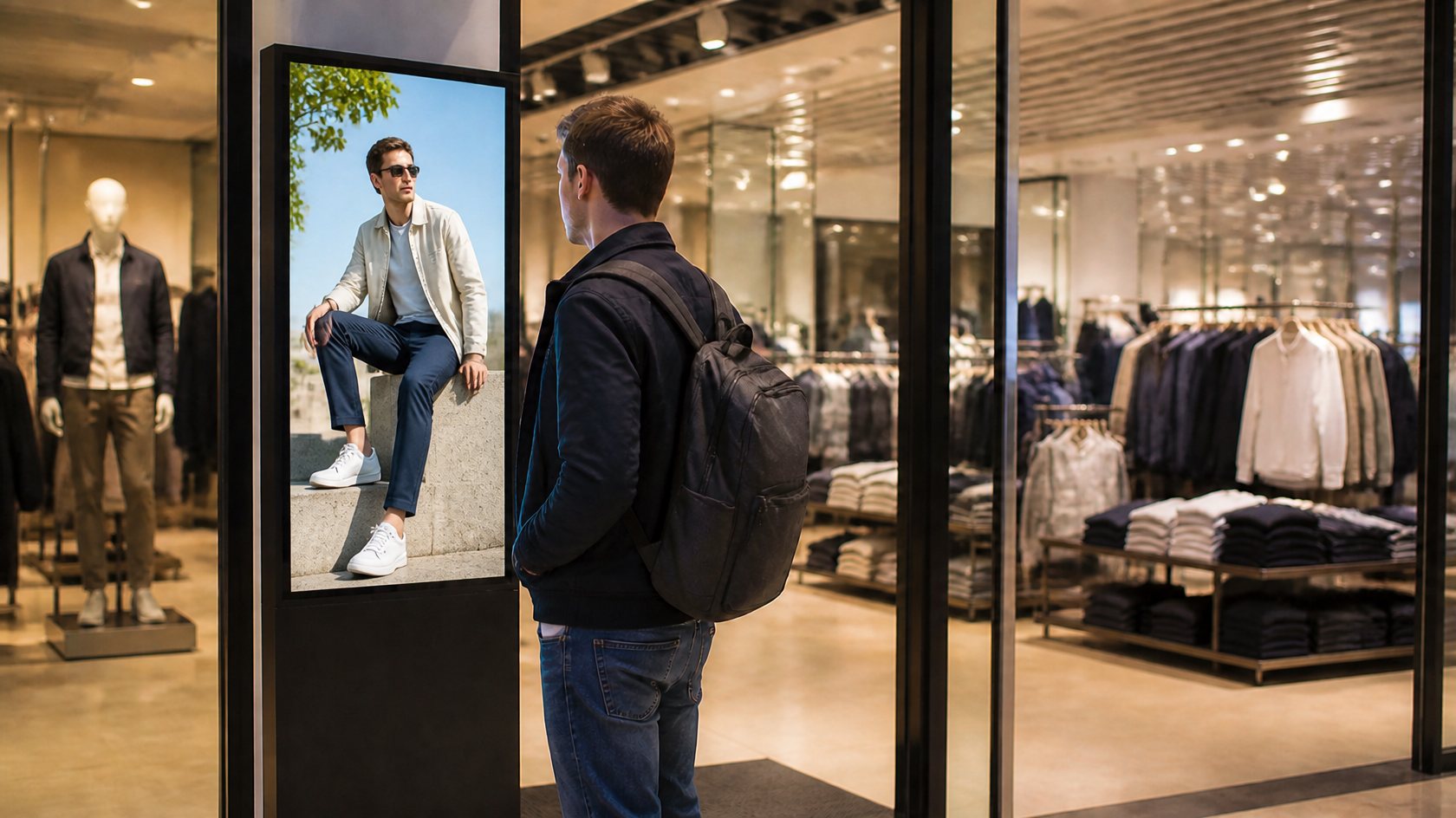
That’s a problem. The store is still where most retail revenue happens, and it’s the one channel where most retailers still show every customer exactly the same thing.
What “real time” means in a store
Online, real time means reacting to the click someone just made. In a store, it means reacting to the moment someone is in: the time of day, the weather outside, what’s on the shelf right now, which store they’ve walked into and, if they’ve told you who they are, what they care about.
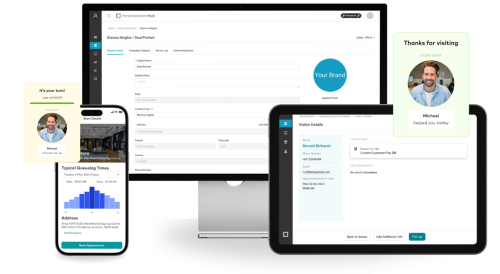
Think of it as a ladder. At the bottom is a default campaign everyone sees. Next is a localised campaign that knows the store, the stock and the hour. Then a personalised one, once a customer has identified themselves by checking in with an app, joining a virtual queue or scanning a code on a screen. The top rung is engagement: the customer interacting with the brand, not just looking at it.
Most stores are stuck on the bottom rung. The playlist runs, the screens loop, and nobody knows whether it worked.
The data’s already there
Here’s what most retailers miss. They don’t need new data to climb the ladder. They already have stock feeds, trading hours, loyalty programs and CRM systems. The gap is wiring that data to the screens, apps and staff devices in the store, fast enough to matter.
The gap isn’t data. It’s getting the data you already have onto the shop floor fast enough to matter.
Research published this year found that 74% of consumers are more likely to buy when they get a real-time personalised offer. Shoppers don’t care which channel the offer arrives on. They care that it’s relevant while they’re standing there.
One experience, every touchpoint
The other shift is that a campaign is no longer one piece of creative for one screen. It’s one experience that adapts: the website, the app, the entrance screen, the shelf edge, the tablet a staff member is holding. Same offer, same customer, shaped for each surface.
That only works if the decision is made once and delivered everywhere. Bolt a separate tool onto each channel and you’re back to fragmented experiences and five versions of the truth.
Start where the money is
You don’t need to personalise every screen on day one. Pick the moment closest to a purchase decision, like the entrance, the fuel pump, the queue or the fitting room, and make that one moment respond to context. Measure it against a control. Then climb the next rung.