

In short
Old decisioning tools are expensive black boxes. Open AI models let brands host and optimise their own models, which will become their core differentiator.
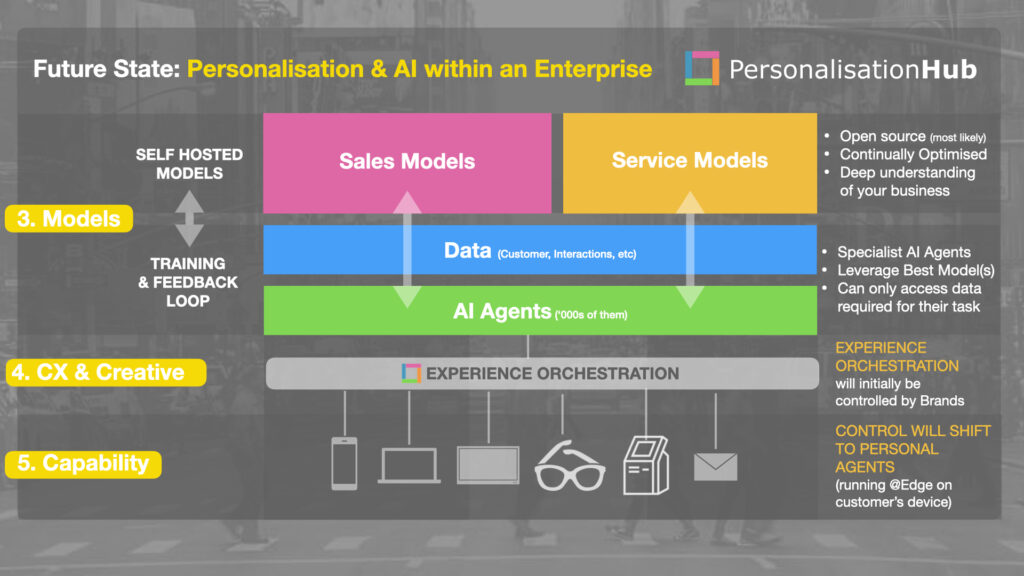
- Legacy decisioning is costly, slow to change and often not real time.
- Open models let brands self-host and continuously optimise.
- Support sales and service with the same models, and suppress sales when a customer has an issue.
Talking about AI models is where things get exciting. AI will let brands deliver remarkable personalised experiences in real time.
The arrival of strong open-weight models in early 2025 pushed more of the market towards open models, which is better for everyone.
Old world: decisioning tools
- Expensive, black-box solutions.
- Significant effort to add new capability.
- Many don’t support prospects, and they’re not real time.
New world: open AI models
- Brands host and optimise their own models.
- Many agents get built, each using the best model for the job and scored continuously against evaluations.
- Differentiation happens in the customer and staff experience.
Data, data, data
Models need accurate data to train on. Usable data is still the biggest blocker in most large organisations.
In future, your organisation’s models will be its core differentiator.
Keep optimising
Define the outcomes you want, track them and feed them back into your models. Support both sales (revenue) and service (call diversion and cost avoidance), and suppress sales messages when a customer has an issue.
Think about your website: you should be able to build a page for each visitor, in real time, that’s fully personalised and blends sales and service. That’s if customers need to visit your website at all.