
In short
Personalisation can’t run in a silo. Experiences climb four levels, from default to localised to personalised for unknown visitors to personalised for logged-in customers, and localisation and retail media sit on the same ladder.
- Run localisation and personalisation in the same team.
- Unauthenticated visitors are where most of the value is.
- Retail media targeting should align with your personalisation profile.
Personalisation can’t operate in a silo. Every experience needs to reflect how much data you have on a visitor and how likely it is that it’s really them.
Localisation and retail media sit on the same ladder
Your localisation strategy needs to be coordinated with personalisation, ideally managed by the same team.
The same hierarchy applies to retail media networks. As your audience data improves, targeting gets more granular and you move up the ladder. Your network’s first-party targeting data should align with your personalisation profile, as a subset of those attributes will eventually be offered to advertisers.
At some point the retail media team will compete with the personalisation team for the same screen space: your campaign or an advertiser’s? By then you should be able to decide in real time, based on the business value of each option at that moment.
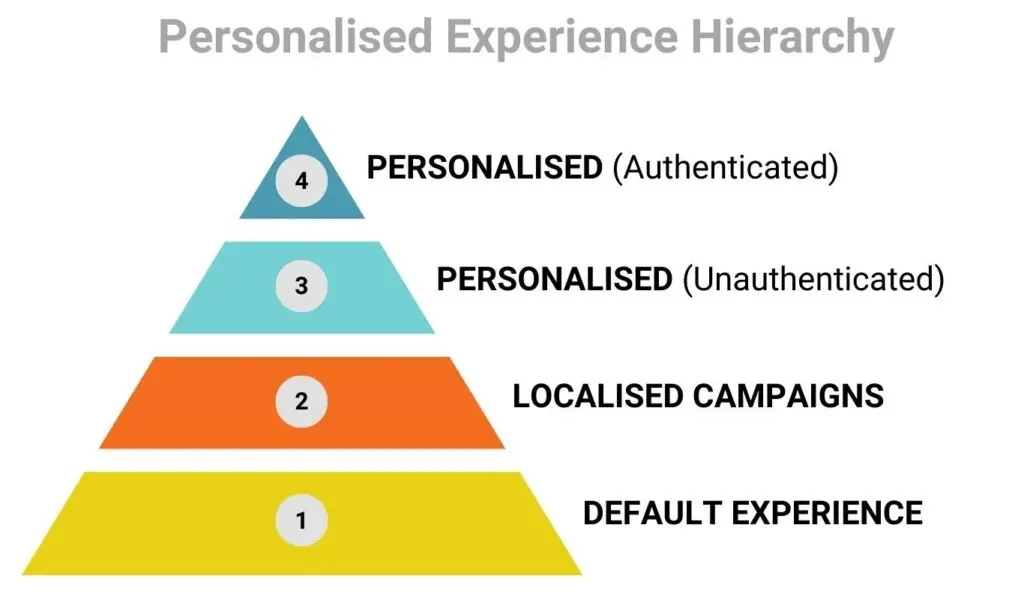
Level 1: default experience
The experience everyone gets when you have no data on a visitor, or when latency is a problem. Show it first to avoid flicker, then swap in personalised variants.
Level 2: localised campaigns
Once you know where someone is, the default is replaced by a localised campaign. That can be as simple as updated copy (“Other customers in Bondi Junction…”) or advanced geo-targeting based on census and demographic data.
Level 3: personalised, not logged in
This is where organisations can drive the most value, especially brands chasing market share, as this is where their competitors’ customers sit. As third-party cookies lose reach, so does remarketing, so you need a solid first-party digital identity strategy that tracks these visitors across their devices and browsers.
Personalising for visitors who aren’t logged in is where most of the value is.
Level 4: personalised, logged in
The most common level today. Customers are logged in, so it’s easier to combine everything you know about them. Focus on adding every new device and browser to their device graph at each login. That builds better first-party audiences and helps you recognise them at level 3.
Related on Personalisation Hub
Read next