
In short
In-store retail media turns a retailer’s screens into media that brands buy. To scale, it needs audience-based pricing, standard buying and proof of sales.
- Global retail media is forecast to pass $200 billion this year.
- Brands will expect to buy in-store screens like any other media.
- Keep screen time for your own campaigns, and price both.
Retail media started online: sponsored products, search ads and banners on a retailer’s own website. It’s now one of the fastest-growing channels in advertising, with the global market forecast to top $200 billion this year.
But online inventory is finite. There are only so many sponsored slots on a search page. So attention has shifted to the place with the most attention left to sell: the physical store.
What in-store retail media actually is
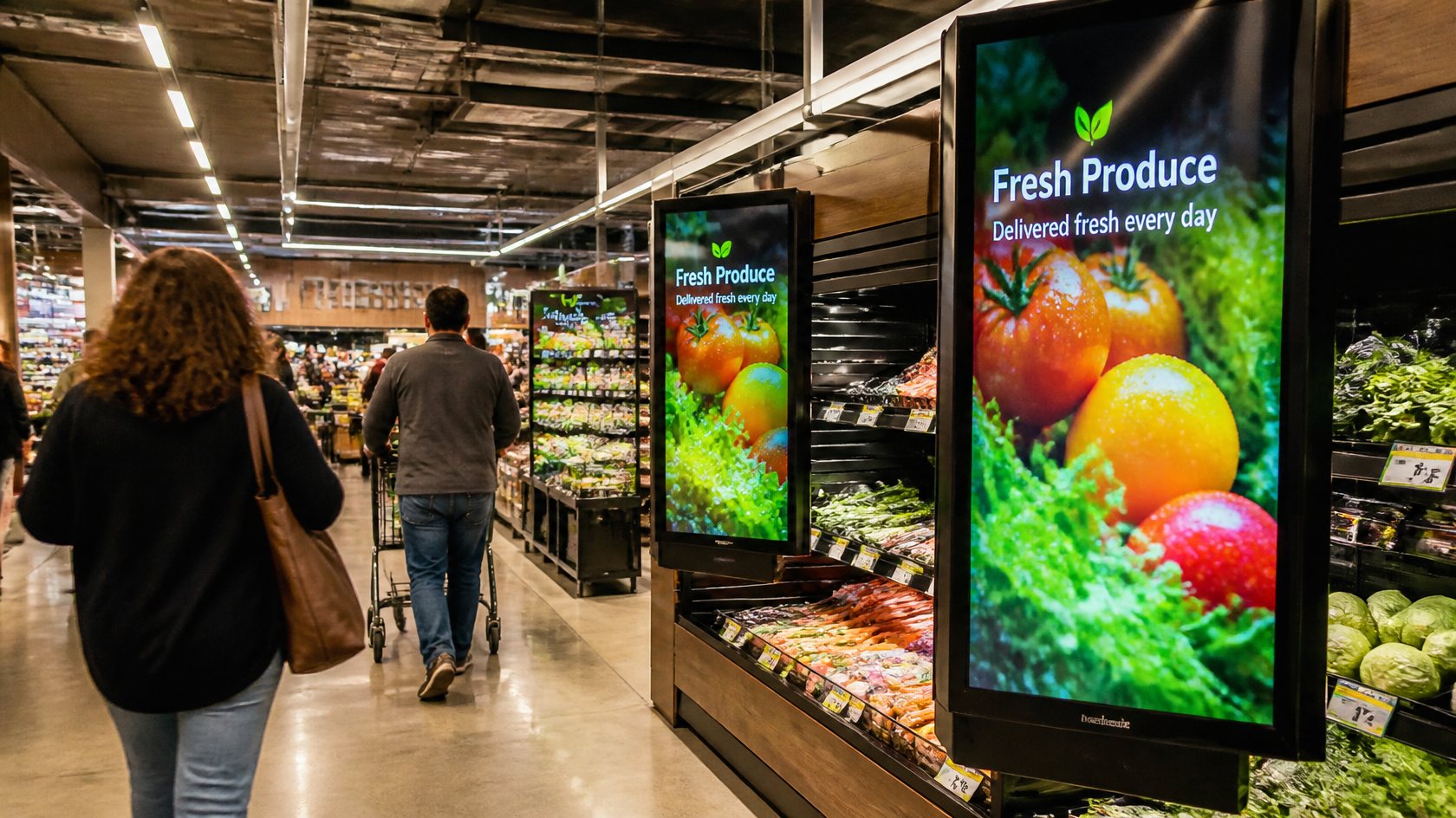
Put simply, it’s advertising on screens, shelf-edge displays, audio and other connected fixtures inside a retailer’s own stores, sold to the brands whose products sit on the shelves. The retailer becomes the media owner. Brands buy access to shoppers at the exact moment they’re deciding what to buy.
That’s different from traditional digital signage, where screens only show the retailer’s own content, and from digital out-of-home, where an outdoor media company owns the screens.
Why people call it the new TV
Two reasons. Reach: a large store network sees millions of visits a week, from people who are physically there to buy. And proximity: unlike TV, the ad runs metres from the product.
TV can only tell you to buy something later. In-store media is metres from the shelf.
But TV has something in-store media mostly hasn’t had yet: a standard way to buy, price and measure it. That’s what’s changing now.
What brands will expect
Media buyers don’t want to learn a new way of buying for every retailer. They’ll expect to buy in-store screens like any other media: through the platforms they already use, priced on the audience they reach, and backed by measurement they trust.
For retailers, that means three things. Audience-based pricing, because a screen at the entrance at 5pm is worth more than one in the back corner at 10am. Standard buying, by connecting to the demand-side platforms brands already use. And proof, by closing the loop from exposure to sale.
Don’t sell every slot
One trap to avoid: selling all your screen time to advertisers. Your own promotions, your loyalty program and your in-store experience need screen time too. The smart networks treat their own campaigns like any other buyer, and compare what a slot is worth to the business with what an advertiser will pay for it.