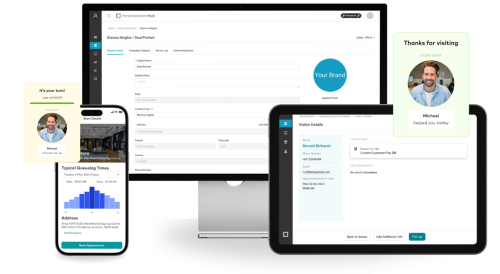
How QR Control works
QR Control turns a connected display into something a visitor can control from their own phone. It shows a QR code that changes dynamically, and scanning it connects the visitor's phone to that display so they can browse and play the campaigns running there.
How it works
QR Control is a display-level feature and a campaign-level touch-point, and both need to be in place.
- Enable QR Control on a display. The display then shows a QR code that changes dynamically.
- QR-Control is a touch-point on a campaign's Campaign Brief. The campaign have either Website or Digital Signage enabled before you can switch QR-Control on for it.
- Switching on the QR-Control touch-point sets the campaign's targeting rules automatically — you do not build them by hand.
- You then define the mobile store site banner, its call to action button, which engages the campaign on the screen, and the pop-up message shown when the visitor taps the button.
- When a visitor scans the code, their phone connects to that display. The mobile store site shows that display's QR Control campaigns in a carousel.
- Tapping a campaign's call to action shows the pop-up message on the phone and plays the campaign's assigned video on the display, at the same moment — the visitor's phone becomes a remote control for the screen.
Why it matters
The platform already narrows what plays on a display to whoever is in front of it — personalisation and decisioning can turn 100 possible campaigns into the 3 most relevant for that customer. QR Control then allows a customer to interact with and engage with the campaign that's most relevant to them (capturing their actual intent) — the exact colour, model or service.
That refined intent carries straight into the handover to retail staff: a member of staff picking up the visitor can see which QR Control campaign they engaged with, so the conversation starts already knowing what the visitor wants rather than starting from scratch. That significantly reduces average handling time.
What QR Control is not
QR Control is not a kind of triggered campaign, and it does not decide what plays in a display's normal rotation. It is a separate touch-point and engagement mechanism layered onto a campaign that is already running through another touch-point. See How campaigns work: playback strategies, touch-points and status for where touch-points and playback strategies fit together.
Related
Last updated 25 September 2026